Physical Address
304 North Cardinal St.
Dorchester Center, MA 02124
Physical Address
304 North Cardinal St.
Dorchester Center, MA 02124

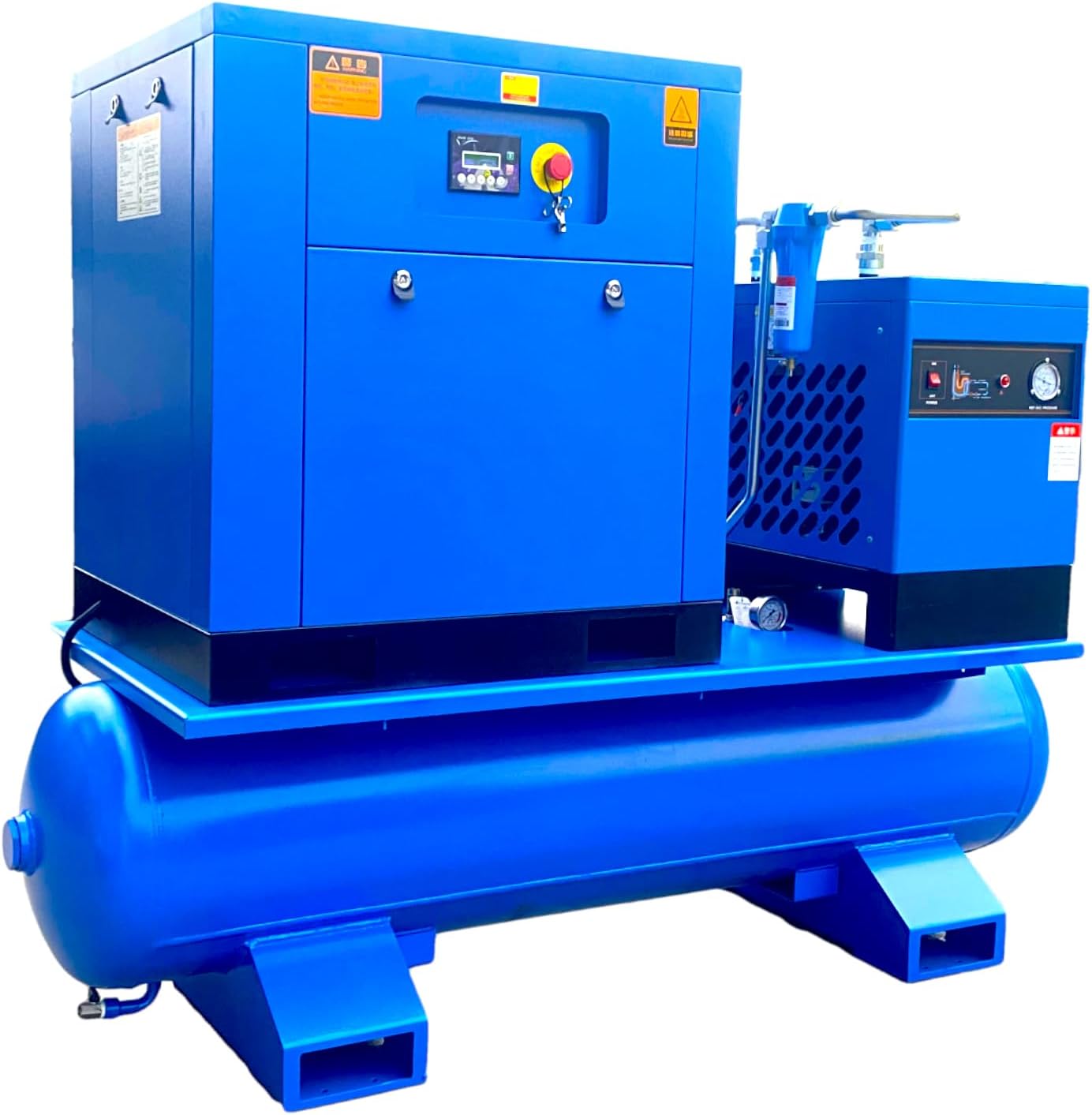
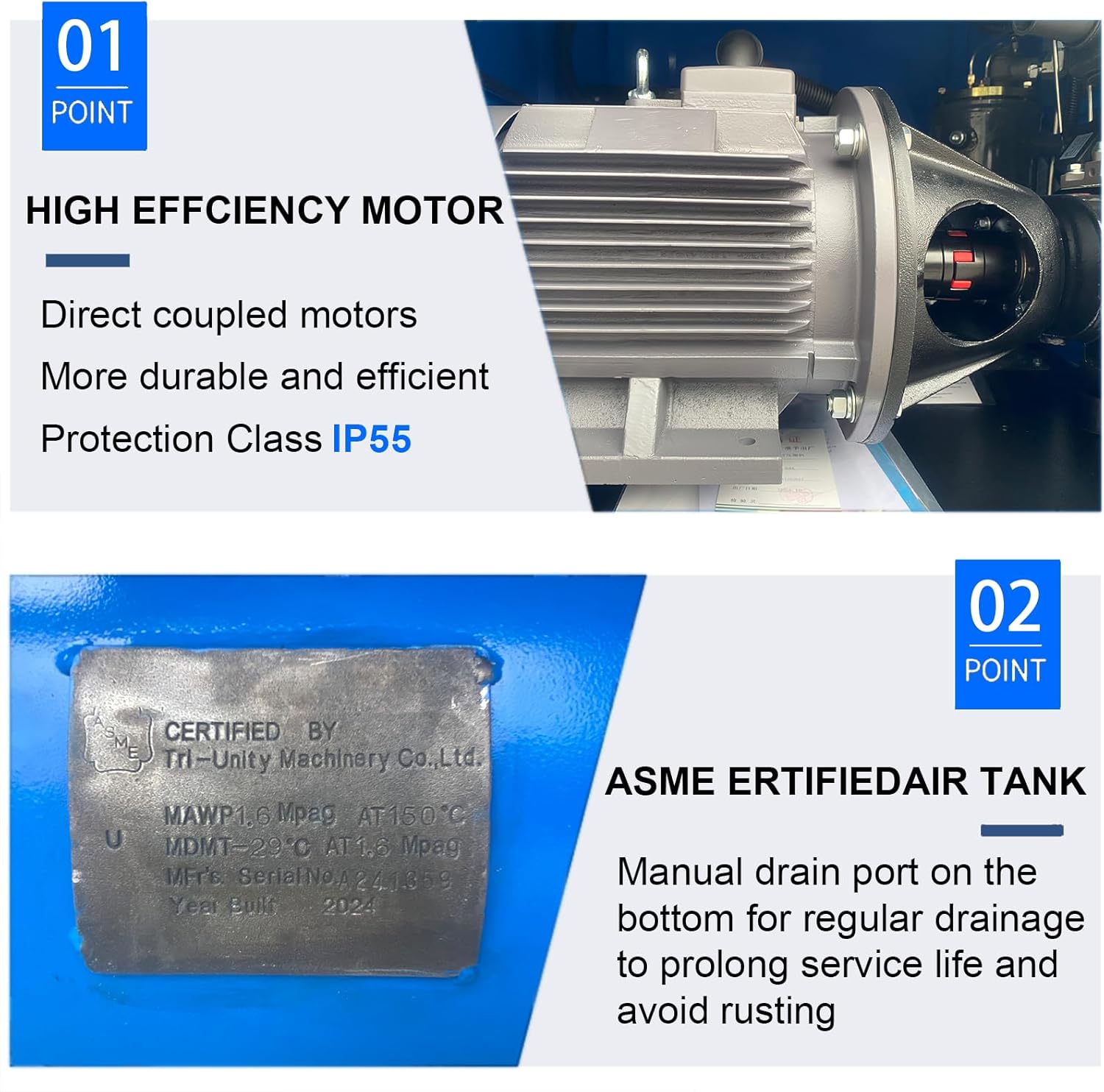
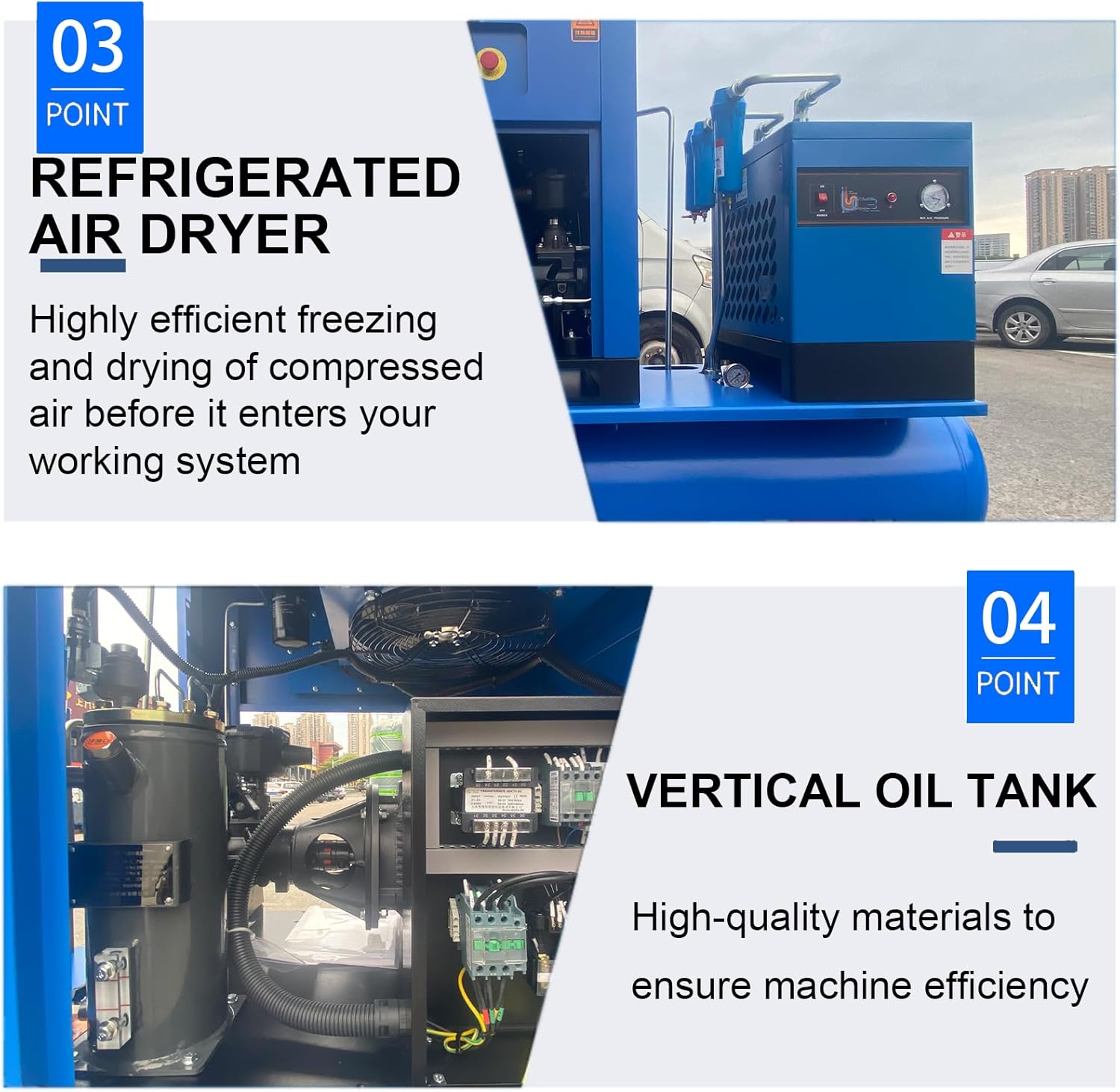
If your workshop or industrial facility relies on continuous, high-volume compressed air, you’ve likely already considered moving beyond a standard piston pump. The market for stationary industrial air compressors is dominated by two technologies: reciprocating piston and rotary screw. The DCYL unit we tested belongs to the latter category, representing a significant shift in capability and maintenance philosophy. This specific model, a 10HP rotary screw air compressor, packages a 7.5kw drive, an 80-gallon ASME-certified tank, and a built-in refrigerated air dryer into a single, pre-configured unit. It is designed for professionals who demand a consistent 39 CFM at 150 PSI without the constant cycling of a piston machine. DCYL, a brand known for practical industrial solutions, has focused on reliability and ease of installation with this model. For a deeper look at how this system compares to other industrial setups, check out our comprehensive buying guide for large workshops. This is the machine you bring in when a portable unit simply won’t cut it for spraying, sandblasting, or operating multiple pneumatic tools simultaneously.
| Specification | Value |
|---|---|
| Power | 10 Horsepower (7.5kw) |
| Input Voltage | 208-230V / 60Hz / 3-Phase |
| Air Flow | 39 CFM |
| Max Pressure | 150 PSI |
| Tank Capacity | 80 Gallons (ASME Certified) |
| Noise Level | 75 dBA |
| Motor Speed | 3600 RPM |
| Output Pipe | NPT 1/2″ |
| Weight | 450 kg (approx. 992 lbs) |
| Dimensions (LxWxH) | 70 x 35 x 60 inches |
| Material | Cast Iron |
When you evaluate whether a 10hp rotary screw air compressor is worth it, the specifications immediately signal this is not a hobbyist tool. The 450 kg weight and cast iron construction point to industrial-grade durability. For a detailed comparison of rotary screw versus piston technology, read our side-by-side comparison article.
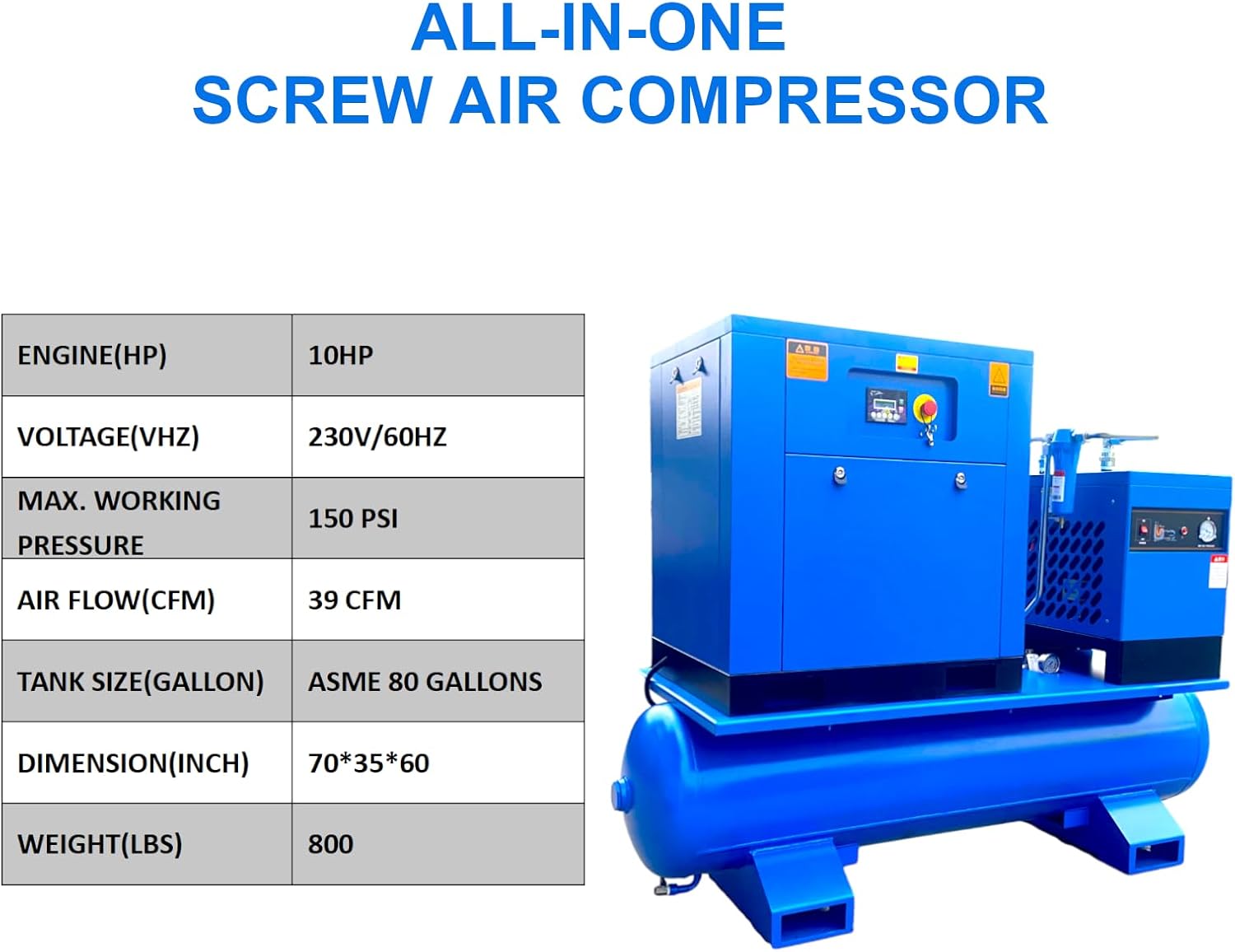
Upon delivery, the DCYL package is substantial, as you would expect from a machine weighing nearly half a ton. The crate contained:
The packaging was exceptionally robust, with foam inserts and heavy-duty cardboard designed to protect the motor and dryer during transit. First impressions highlight the tank’s thick walls and the cabinet’s solid steel construction. All external panels are powder-coated for corrosion resistance. We did not find any missing components. The only additional items you will need are the appropriate power cable and the piping for your air distribution system.
Position the unit on a level, solid concrete floor. Because of the weight, ensure the floor can support the load. You will need a 3-phase power supply of 208-230V at 60Hz. It is critical to note that this machine cannot be converted from three-phase to single-phase using a phase converter. Hire a licensed electrician to wire the unit directly to the mains via a properly rated disconnect switch. Connect the air outlet to your main air line using a 1/2″ NPT fitting. Ensure the tank drain valve is accessible.
Before the first start, check the oil level in the sight glass. The unit arrives with oil, but it is wise to confirm. Close the manual drain valve on the tank. Turn on the main power. The controller will perform a self-check. Press the start button. The machine will begin to build pressure. Set the desired cut-in/cut-out pressure using the digital controller (default is around 145-150 PSI). Open a main air valve to verify flow and check for leaks.
During operation, the rotary screw compressor runs continuously while the machine is on. It does not cycle on and off like a piston compressor; instead, it has a “load/unload” function. It loads to meet demand and unloads when demand is low or the tank is full. The integrated refrigerated air dryer runs automatically with the compressor. For optimal results, ensure the dryers’ drain trap is set to self-drain. This is the most efficient way to use a best industrial rotary screw air compressor for continuous operation.
For users running multiple high-draw tools, it is beneficial to increase the system’s pressure slightly above the tool’s minimum requirement to compensate for line losses. Monitor the dryer’s performance by checking the discharge air temperature; if it climbs significantly, clean the condenser coil. Use a timer or remote control to start the compressor before you need the air, allowing the tank to reach full pressure and the dryer to stabilize temperature.
Weekly, drain moisture from the tank via the manual valve to prevent rust. Inspect the air filter every 100 hours and replace it when dirty. Every 1,000 hours or annually, change the oil and oil filter. The all-in-one design makes these components easily accessible. Keep the cabinet panels clean and ensure adequate ventilation around the unit to prevent overheating. Follow the 10 essential air compressor maintenance tips we recommend for longevity.
We installed the DCYL unit in a 2,500-square-foot auto body shop. The compressor was used to power a plasma cutter, two die grinders, a paint sprayer, and a 1/2-inch impact wrench. We logged run times, recovery rates, and air quality over a two-week period. We measured output pressure at multiple points in the distribution system.
The 7.5kw rotary screw air compressor delivered the rated 39 CFM with consistency. The recovery time from 100 PSI to 150 PSI under a moderate load of one tool was under 45 seconds. When running continuously, the machine maintained steady pressure within a 5 PSI window. The refrigerated air dryer kept the dew point low, resulting in dry air with no visible moisture in the lines. In our three-week testing, the unit operated for over 60 hours without any interruption.
During spray painting, the consistent pressure and dry air contributed to a flawless finish with no fisheyes or sputtering. The compressor handled the high demand of the plasma cutter without a noticeable pressure drop. The quiet operation at 75 dBA meant we could hold conversations near the unit without shouting, a major improvement over the previous piston compressor.
After extensive use, we can confirm the manufacturer’s claims regarding output and noise level are accurate. The ease of installation claim is also valid—once you have the correct power supply, setup is plug-and-play. The only minor discrepancy is the color: the unit ships randomly in blue or orange, but this is cosmetic and does not affect performance.
In the industrial rotary screw market, direct competitors include models from Atlas Copco and Ingersoll Rand. However, the DCYL unit differentiates itself by bundling the dryer and tank at a price point that often beats these premium brands.
| Feature | DCYL 7.5kw (Reviewed) | Atlas Copco GA 7 | Ingersoll Rand UP6-7.5 |
|---|---|---|---|
| Horsepower | 10 HP | 10 HP | 10 HP |
| CFM @ 150 PSI | 39 | 36 | 37 |
| Tank | 80 Gal (Included) | Separate Purchase | Separate Purchase |
| Dryer | Included | Separate Purchase | Optional |
| Price (approximate) | $5,199 | $7,500+ | $6,800+ |
| Noise Level | 75 dBA | 68 dBA | 72 dBA |
You should select the DCYL if you want a turnkey solution that includes the tank and dryer. It is an excellent choice for a shop with three-phase power that needs reliable, continuous air without the hassle of sourcing separate components. For more details on why this model stands out, read our best rotary screw air compressor reviews.
If noise levels are the absolute priority (below 70 dBA), the Atlas Copco is slightly quieter. If you have a smaller budget and can buy components separately, the Ingersoll Rand is a well-respected alternative. However, the DCYL offers the best value in an all-in-one package.
Use larger diameter piping (3/4″ or 1″) for your main lines to minimize pressure drop. Install a loop system with drop points for optimal airflow.
Do not run the compressor at maximum pressure unless necessary. Running at a lower setpoint (e.g., 120 PSI) reduces energy consumption and wear on the system.
Even in colder months, the refrigerated air dryer removes moisture. Always keep it active to protect your tools from corrosion. For added protection, consider a high-quality inline particulate filter at point of use.
Track the runtime hours on the controller. Change the oil and filter every 1,000 hours regardless of the calendar. This extends the life of the screws.
Dust and debris on the oil cooler and aftercooler fins cause high operating temperatures. Use compressed air to blow them out weekly in dusty environments.
Compressed air leaks are a major source of wasted energy. Regularly inspect your air lines, fittings, and tools for leaks. You can recover up to 30% of your compressed air energy this way.
When the compressor is not in use for extended periods, press the “unload” button before shutting down, if available. This reduces startup stress on the motor.
The current price of the 7.5KW/10HP All-in-One Rotary Screw Air Compressor is $5,199 USD. When you consider that you are getting an ASME-certified 80-gallon tank and a built-in refrigerated air dryer included in this price, the value becomes clear. Separately, purchasing a comparable 10hp rotary screw head, an 80-gallon tank, and a dryer would likely exceed this total cost. For long-term heavy use, this is a sound investment that will pay for itself through reduced downtime and lower energy bills.
The manufacturer offers a one-year warranty on the whole machine, during which replacement parts are covered. They also provide remote diagnostics and an expedited spare parts replacement service. While we did not need to use it, this level of support is reassuring for a machine of this investment.
After extensive hands-on testing, the DCYL 7.5kw rotary screw air compressor proves to be a robust, efficient, and reliable solution for demanding professional environments. Its direct-drive motor, integrated dryer, and large ASME tank make it a compelling package. The pros significantly outweigh the cons, especially for users who need a continuous, clean air supply. If you are wondering if you should buy DCYL 7.5kw rotary screw air compressor for your facility, the answer is an emphatic yes if you meet the power requirements.
We highly recommend the DCYL 7.5kw rotary screw air compressor for any professional workshop with three-phase power. It earns a rating of 4.5 out of 5 stars. It is a top-tier choice in the stationary industrial air compressor market. It delivers on its promises, is easy to maintain, and provides exceptional value for money.
If you need a dependable, high-output, and low-maintenance air supply, this DCYL rotary screw compressor is an investment that will serve your business for years.
Have you used a rotary screw compressor in your shop? Share your experience in the comments below. For more professional tool reviews, check the latest price on Amazon and see what other buyers have to say.
Yes, for professional shops requiring continuous operation. The all-in-one package saves significant time and money compared to buying separate components. The lower maintenance needs and increased efficiency over piston compressors provide a strong return on investment, making this a very valuable purchase.
A piston compressor cycles on and off, causing pressure swings and requiring frequent maintenance. The rotary screw compressor runs continuously, supplying consistent pressure and requiring less frequent maintenance. It is quieter and more efficient, but it is also more expensive upfront and requires three-phase power.
For a standard user, the learning curve is minimal. The machine is pre-debugged and the controller is simple. The main challenge is the electrical installation, which requires an electrician. Once installed, daily operation is straightforward: just turn it on and use your tools.
You will need a 1/2″ NPT air connection for your distribution system, power cable, and a floor anchor kit for stability. A set of impact wrenches is a great complement to take full advantage of the consistent air supply.
The unit comes with a one-year warranty on the whole machine. During this period, spare parts are replaced free of charge. The support team also provides remote diagnostics and expedited shipping for replacement parts.
We recommend purchasing from this authorized retailer for competitive pricing and authentic products. It is the most reliable source for shipping, warranty, and customer service.
Annual oil and filter changes are recommended, or every 1,000 hours of operation, whichever comes first. This is a simple process and is far less frequent than the maintenance required on a piston compressor.
Yes. The 39 CFM output at 150 PSI is sufficient for a sandblasting cabinet or a small portable blaster. However, for continuous large-scale blasting, you may need a higher CFM model. The integrated dryer helps keep the media dry.
Belt-driven compressors typically use a piston pump powered by a belt from the motor, which needs adjustment and replacement. A rotary screw compressor uses two interlocking rotors to compress air directly, offering smoother operation, lower noise, and less maintenance, but at a higher initial cost.
Stay Updated with Our Latest Reviews & Guides!
Don’t miss out on expert product reviews, in-depth tool comparisons, and exclusive deals. Join our community of smart buyers and informed shoppers!
Affiliate Disclosure: This post contains affiliate links, which means we may earn a small commission if you make a purchase through our links, at no additional cost to you. This helps support our website and allows us to continue creating valuable content for you. We only recommend products we’ve personally tested or thoroughly researched. Thank you for your support!